

SUSTAINABILITY
From Forest to Future
We want to be our customers’ best, most reliable, and most committed partner. We want to set a global standard for responsible furniture production, where Scandinavian design, industrial precision, and human decency are united in products that last for generations. That is our vision. Our focuses are customer first, uncompromising quality, trading seamlessly, and transforming continuously. We design, manufacture and deliver modern furniture with Scandinavian aesthetics and uncompromising quality through an efficient, responsible and learning value chain from forest to store. This sums up our mission. These are meaningful values and virtues, and they help sustain CoreOne as a business. But our purpose is not just that - not just to make a profit and sustain. We want to use our business as a means for good, and we commit to serve and to have a significant positive impact on our communities, people, and the planet through our operations. It is written in CoreOne’s Articles of Association, and we live it every day.

What does all this mean to you as a partner of CoreOne? Choosing CoreOne means choosing a partner who removes complexity from your sourcing and delivers certainty in every step. We combine design intelligence with full in-house manufacturing, technical control, and verified compliance. Our vertically integrated production secures consistent quality, competitive pricing, and reliable lead times, while our documentation and certifications ensure full transparency and smooth approvals. We understand that you operate under pressure to balance design value, risk management, and sustainability credentials - and we have built our entire organization to serve exactly that need. With CoreOne, you gain a supplier who is as committed to your business objectives as to its own standards. We focus on long-term trust, operational precision, and design relevance, enabling you to expand ranges, markets, and margins with confidence. In short, we make great design commercially viable - responsibly, predictably, and with purpose.


Environment
As a premium white label supplier, we know that our customers hold a strong focus on compliance and on making as little environmental impact as possible. Adding to that, we are a design house, and our job is to create a platform for products that stand the test of time in respect of design and quality. The longer a product lasts, the less overall impact it makes. Our materials are robust, our constructions strong, and our design timeless. We trust that any single product, when used properly, will last for decades. Our “Maintenance Guide” helps consumers extend the longevity of our products.
”
Do you know that CoreOne reduced the amount of polystyrene foam used in packaging by 96% already in 2022?
”
Climate Report
At CoreOne, we recognise the urgency of addressing environmental challenges and are committed to contributing positively towards a sustainable future. In our pursuit of greater transparency and accountability, we issue an annual climate report. This report, based on the GHG Protocol (Greenhouse Gas) outlines our environmental impact with data on our group’s Scope 1 and 2 emissions, and even some of our Scope 3 emissions. This report is supplied to many of our customers and is available for all stakeholders. It is our ambition to develop the report so that it further highlights our progress in sustainable practices, fosters more engagement, and sets clear, measurable goals for future improvements.
Future issues of the climate report will further detail our efforts in key areas such as energy use, waste management, resource conservation, and emissions reduction. We will present data collected from across our operations, analyse to show trends, pinpoint challenges, and track progress against our sustainability goals.
Energy

In Denmark, our headquarters is equipped with solar panels so that we produce energy that equals 90% of our consumptions for heating, ventilation, lighting, office equipment, building systems, appliances, and for charging our EVs. The remaining energy that we buy from utility providers is predominantly renewable, complemented by power offset by renewable energy certificates.
In Vietnam, we currently do not have our own solar panels, and our electricity is supplied from the regional power network. In 2025, 78,5% of our electricity consumption was covered by International Renewable Energy Certificates (I-RECs) for solar power. This ensures the authenticity and reliability of renewable energy sources, and its registry follows similar rules as Guarantees of Origin (GoO) in Europe and Renewable Energy Certificates (REC) in North America. Like those standards, the I-RECs guarantee the origin of one MWh of green electricity injected into the grid.
Vietnam is actively pursuing its goals for a sustainable and green energy transition with a focus on expanding renewable energy capacity significantly. The country plans to add an additional 56 gigawatts of renewable energy, including 17 GW from onshore wind and 39 GW from solar power, by 2030. This expansion is crucial for Vietnam to reach its targets of peaking CO2 emissions by 2030 and achieving climate neutrality by 2050. In 2024, Vietnam's electricity generation reached 282.40 billion kWh, with renewable energy accounting for 43%. Overall, Vietnam's robust approach to expanding renewable energy, with international support, particularly from Denmark, aims to position the country as a leader in sustainable energy within Southeast Asia.
EUDR

We have diligently complied with the EU’s timber regulation (EUTR) since its enactment in March 2013 and not only served European but also customers outside Europe with our traceability documentation. The transition from the EUTR to the EU Deforestation Regulation (EUDR) marks a significant step in the European Union's efforts to combat deforestation and promote sustainable trade practices, and it has broader concerns. We are working with relevant governmental and industry bodies to ensure full compliance with EUDR when its legislation is effective.
CoreOne’s products are predominantly made from two different wood species, American White Oak and American Black Walnut, which we source directly from sawmills in the Eastern part of the US. American White Oak (Quercus Alba) is unique to North America and makes up 16% of the US hardwood growing stock. According to Forest Inventory Analysis (FIA) data, 20.9 million m³ are harvested annually, but nearly 40 million m³ biomass growth happens in the forests during the same period.
American Black Walnut (Juglans Negra) is also unique to North America and predominantly grows in the central and eastern parts of the US. According to the US Department of Natural Resources and the USDA Forest Service, the volume of black walnut in the forests tripled from 1996 to 2018. The long-term future for black walnut appears bright due to favourable growth to removal ratios.
Wood

Two of our lumberjacks in the forests near Lewisburg, West Virginia
ISO 14001
Response Vietnam has been certified ISO 14001 since 2021. ISO 14001 is related to environmental management to help us minimise the negative impact on the environment, comply with laws and regulations, and continually improve. Specifically, ISO 14001 has delivered our environmental management system (EMS) framework. The key aspects herein are:
-
Plan-Do-Check-Act (PDCA) cycle planning for environmental management, implementing practices, checking whether the actual performance meets the planned standards, and taking actions to improve on the processes.
-
Our environmental policy on commitments to prevent pollution, comply with environmental legislation, and continually improve environmental performance.
-
Implementation and operation; setting up roles and responsibilities, training, communication, EMS documentation, document control, operational control, and emergency preparedness and response.
-
Monitoring and measuring processes against environmental policies, objectives, targets, legal and other requirements, correcting problems, and making improvements.
-
Management review with periodic evaluations of the EMS to ensure its continuing suitability, adequacy, and effectiveness.


We use the Higg Facility Environmental Module (Higg FEM) to measure and evaluate the environmental impact of our operations. Our certification proves that we use Higg FEM to assess various environmental aspects of production including water use, waste management, energy use, greenhouse gas emissions, and chemical management. As Higg FEM standardises how environmental sustainability is measured and reported, it facilitates collaboration and drives collective action towards reducing environmental impacts. Therefore, it is regarded as a strong tool and reporting format by many of our customers and other stakeholders.
Reduced Use of Polystyrene Foam
(EPS, Styrofoam)
Polystyrene foam is the cheapest and most suitable packaging material for impact absorption, but it is made from benzene and ethylene, two petroleum products, and is almost impossible to degrade. Incineration releases harmful pollutants and is therefore not viable. The material normally ends up in landfills and harms the environment. In 2021, we initiated a project to reduce the use of polystyrene, and already by 2022, the reduction was a considerable 96%. FSC paper and cardboard materials are used to secure the furniture inside our boxes and effectively absorb impact.


Social
To us, social responsibility means creating meaningful opportunities and fair conditions for our people. We invest in continuous education and training, from English and IT courses to leadership and safety, ensuring personal and professional growth. Annual workplace surveys guide improvements, and we consistently pay above minimum wages with added benefits to support families. Through our CoreOne Scholarship Programme, we help underprivileged children in Vietnam gain access to education, while partnerships with NGOs extend our impact globally. With SA8000 certification and regular SMETA and amfori BSCI audits, we commit to maintaining the highest standards in employee rights, workplace safety, and social equity.
”
Do you know that in 2021, we established a CoreOne Scholarship Programme in Vietnam to help poor children stay in the school system?
”
Our Employees
CoreOne exists not only to make a profit, and not only to make a difference in the world of furniture. We strive to have a global reach, but a local impact, and we constantly work to benefit the societies in which we operate. We also exist for the benefit of our employees. We want to create a great company where great people come to work, and for that reason, one of our four strategic pillars is organisational development. We have a lot of initiatives to support this, among them are diverse educational offers conducted within our factory premises. 14-week English classes at different levels have been running for many years, and so has general management, LEAN, and IT learning. We even conduct training in parenthood for the benefit of many of our young staff. In Denmark, we educate ourselves in areas like sustainability, LEAN and IT, and many of us regularly participate in training, seminars, courses, and network groups with relevant topics.

In June 2026, we conducted our latest Employee Satisfaction Survey at our production facility in Vietnam. The survey received 253 responses and achieved an overall satisfaction score of 4.19 out of 5 (83.8%), representing an improvement of 10.1 percentage points compared to the 2025 survey.
Employees reported particularly high levels of engagement and loyalty. 94% wish to stay with the company long-term, 90% see Response Vietnam as a stable long-term employer, and 85% would recommend the company as a workplace. High scores were also achieved in workplace safety, management support, employee recognition, and employee benefits.
The survey identified several opportunities for further improvement, including salary competitiveness, temperature and ventilation in selected production areas, canteen facilities, and fostering a more open dialogue about stress and wellbeing.
We conduct employee satisfaction surveys every year to monitor employee wellbeing, engagement, and working conditions, ensuring that we continuously improve our workplace based on employee feedback.
We comply with all applicable laws and regulations relating to employee working conditions. The lowest salaries (excluding overtime) for factory workers always exceed 125% of the legal minimum wage, and employees receive additional benefits, including attendance bonuses, production incentives, and childcare allowances for parents.
In 2025, our worker retention rate at the factory in Vietnam was 78%.
CoreOne Scholarship Programme
‘For Future Generations’ helping to gain more equity in education is the founding encouragement of our CoreOne Scholarship programme inaugurated in Vietnam in 2021. 29% of Vietnamese schoolchildren do not finalize lower secondary education, and especially in rural areas, amongst ethnical minorities, and with disabled children, too many do not get a basic education. Schooling is the single most important contributor to social mobility, and helping children to reach the starting line of their school life on an equal footing is imperative for a fair and sustainable development. We invest USD 25,000 per year in our scholarship programme where a committee of workers, office staff, and managers select the recipient areas for our donations. A smaller part of the donations is given to the most underprivileged children of our own workers based on different criteria, amongst them also school attendance ratios.
The larger parts of the donations are given to children in schools in poor regions of Vietnam. Our committee visits schools, private homes, and local authorities to select individual students and to deliver on more general purposes as books, stationary, sports goods, and toys. In 2021, during Covid-19, some funds were used for medical equipment. Among the provinces that have received donations are Chonh Than and Quang Ngai in Central Vietnam. It is our ambition that the scholarship programme, which currently supports 100 schoolchildren each year and holds a special place in our hearts, will develop and grow to benefit many more children.


The BASIZ Initiative, Zambia

We give sponsorships to several local associations within sports, culture, and charity in Denmark. Our largest charity sponsorship overall is ‘The BASIZ Initiative,’ a Danish NGO that has established and runs a school with 300 children in Zambia. Further to the school, the initiative also works to prevent gender-based violence and microfinances projects. We find their motives and work truly worthy of our support, and we trust they make a significant impact in the local Zambian community.
HEALTH
All colleagues in Denmark and Vietnam are covered by medical insurance. Health checks are conducted for all our staff in Vietnam every six months, and in Denmark we do it every two years.


In 2021, we built a 500 sqm sports facility at our headquarters in Denmark with a padel court and a fully equipped fitness room.
26 members of our team in Vietnam are part of the first aid team and are trained twice a year. Every four years, all colleagues in Denmark refreshen our training in first aid and cardiopulmonary resuscitation with the help of an instructor. We have a defibrillator outside our Danish office available to the staff and to the public. We are pleased that it has not been in use since it was mounted in 2019.
SA8000
As a part of our ESG strategy, we were SA8000 certified in October 2025. Based on the principles of international human rights norms as described in International Labour Organization conventions, the Universal Declaration of Human Rights, and the United Nations Convention on the Rights of the Child, it helps us maintain socially acceptable practices in the workplace. We pursue the certification for several reasons, among them ethical commitment, risk management, differentiation, employee retention, and supply chain management.


We are committed to maintaining high standards for working conditions and environmental performance across our supply chain. To support this, we conduct regular amfori BSCI audits.
amfori BSCI (Business Social Compliance Initiative) is a widely recognised framework used to assess and improve social compliance in global supply chains. It provides a structured and transparent approach to identifying, monitoring, and addressing potential risks related to labour conditions, ethics, and environmental impact.
We are proud to have achieved a B (Good) rating in our most recent audits. The amfori BSCI rating scale ranges from A to E, and a B score reflects a strong level of compliance with only minor areas identified for continuous improvement.
Through ongoing audits and follow-up actions, we remain focused on ensuring responsible operations and continuous progress within our factory and partnerships.
ISO 45001
In 2024, our factory also certified to the ISO 45001 occupational health and safety (OH&S) standards. It specifies requirements for our management system, with guidance for its use to enable us to provide safe and healthy workplaces by preventing work-related injury and ill health, as well as by proactively improving performance. The key components of ISO 45001 are:

-
Context, understanding the internal and external factors that affect the occupational health and safety management system, such as the regulatory environment and workplace conditions.
-
Leadership and worker participation, ensuring that the safety management system is integrated into business processes and that managers and employees are actively engaged.
-
Planning, identifying hazards and assessing risks, setting OH&S objectives, and planning actions that integrate health and safety into the organisation’s overall management system.
-
Support, providing the necessary resources, communication procedures, and competent personnel to support the management system.
-
Performance evaluation, monitoring, measurement, analysis, and performance evaluation to ensure that the system is effective in managing risks and improving OH&S performance.
-
Improvement; continual improvement of the management system, including corrective actions and incident investigations.

Governance
Governance means leading with integrity, transparency, and accountability. We uphold strict ethical standards through our Code of Conduct, mandatory for all employees and suppliers, supported by regular audits and self-assessments. Safety is a top priority, guided by ISO standards and continuous training, with the goal of zero workplace incidents. We align with the UN Sustainable Development Goals (7, 8, and 12) to ensure clean energy use, fair labour practices, and responsible production. As a member of the UN Global Compact, we commit to international principles on human rights, labour, environment, and anti-corruption. Finally, our whistleblower system provides a trusted channel for reporting misconduct, reinforcing our culture of respect and openness. Governance at CoreOne is about safeguarding trust while driving responsible growth.
”
Do you know that at CoreOne’s factory, we have a 16-member Health, Safety, and Environment Committee?
”
Gender Diversification and Equality

CoreOne is committed to promoting equality, fairness, and respect in the workplace. We provide equal opportunities for all employees and ensure equal pay for equal work, irrespective of gender, age, ethnicity, religion, sexual orientation, or any other personal characteristic. Discrimination of any kind is not tolerated, and we continuously work to foster an inclusive and respectful work environment.
At CoreOne, we have 12 staff of which 50% are women, and 50% are men. 80% of the managers are men, and the board of directors consists only of men. In Vietnam we have app. 400 staff, of which 35% are women, and 65% are men. The management team at Response Vietnam consists of two women and three men. CoreOne has decided that due to the relatively small number of employees, we do not have a gender diversification policy. But we strongly believe that every single person is unique, and that every single person has a right and an obligation to bring individuality into our common culture. This creates diversity and inclusivity. And as a company, we cultivate it.
Code of Conduct
As part of our commitment to integrity and excellence, CoreOne is dedicated to upholding the highest standards of ethical conduct and compliance in all our operations. To this end, we have a comprehensive Code of Conduct applicable to all employees and sub-suppliers associated with our factory in Vietnam. This Code is designed to ensure that all our business practices align with our core values of respect, fairness, and responsibility. By adhering to this Code, we aim to foster a positive working environment, promote sustainable practices, and maintain the trust of our stakeholders and communities. To ensure compliance, all our suppliers have signed the Code of Conduct. Adding to this we make regular audits at suppliers’ premises, and less vital suppliers are asked to complete self-assessment surveys. These audits and surveys are done with good inspiration from SMETA and amfori BSCI and help us ensure overall compliance. How we ensure supply chain compliance has never failed to satisfy our customers’ requirements.
Safety Policy
As a part of our occupational health and safety (OHS) management system, we have a set of policies and procedures to ensure safety in the workplace. Click here for our First Aid Policy and our Visitor Safety Policy.
Safety training for all staff is done continually following ISO 45001 and ISO 9001 standards, and we have daily safety observations throughout the factory. Production leaders, office staff, HSE team, and senior management are part in the safety observations, and 200 hours are spent each week for this task specifically.
In 2025, we had five incidents where staff was away from work for up to a couple of days, and we had two incidents where staff received first-aid but returned to the workplace immediately after. Our results in 2025 on the internationally recognised safety indicator scores LTIFR (Lost time Injury Frequency Rate) and TRIR (Total Recordable Injury Rate) were 5.5 and 7.6 respectively against an average of 4.03 and 6.9 from 2019-2024 for our company (incidents per 1 million workhours.) These are, for our industry, very low, but the target will remain at 0 for both.
In Vietnam, we have a 16-member Health, Safety, and Environment (HSE) Committee, and a 41-member firefighting and prevention team that is trained every year, the same interval as we run fire drills with the local fire department.


For CoreOne, aligning with the UN Sustainable Development Goals is a strategic way to integrate sustainability into our business operations. Our dedication to sustainability and ethical business practices is reflected in our commitment to three specific goals: Affordable and Clean Energy (SDG 7), Decent Work and Economic Growth (SDG 8), and Responsible Consumption and Production (SDG 12).


SDG 7: We strive to reduce our environmental footprint by optimizing energy use in our production processes and facilities. We invest in energy-efficient technologies and support initiatives that promote renewable energy sources to power our operations. This not only helps in lowering our operational costs but also aids in reducing greenhouse gas emissions, supporting global efforts in combating climate change.
SDG 8: At CoreOne, we believe that a motivated, well-treated workforce is key to our success. We ensure fair labour practices, support for professional development, and safe working conditions across our entire supply chain. By fostering an inclusive environment that respects the rights and contributions of all our employees, we drive sustainable economic growth and uplift the communities where we operate.
SDG 12: We are dedicated to improving resource efficiency and reducing waste in our manufacturing processes. CoreOne employs sustainable practices such as using responsibly sourced materials and implementing recycling programs. Our aim is to create products that are not only durable and timeless but also minimize adverse impacts on the environment throughout their life cycle.
We are proud to contribute to these global efforts and continuously seek innovative ways to advance these commitments further."

The UN Global Compact, the largest corporate sustainability initiative in the world, is a voluntary initiative based on CEO commitments to implement universal sustainability principles and to undertake partnerships in support of UN goals. By being a member, we demonstrate our commitment to responsible business practices in areas such as human rights, labour, environment, and anti-corruption. It shows employees, customers, partners, and investors that CoreOne is serious about its ethical commitments and is willing to be held accountable to international standards.
The initiative is centred around ten Core Principles in four key areas: Human rights, labour, environment, and anti-corruption
Whistleblower System
Core One A/S and Response Vietnam Co., Ltd. want to be companies that employees, customers, suppliers, business partners, investors, and other stakeholders can have full confidence in. One of our strongest values is that we meet people with respect, openness, and trust. Therefore, we have a shared whistleblower system, where internal and external stakeholders can report if they discover that employees, the management of the companies, or others associated with the companies are breaking the law, including the recommendations for good corporate governance and business practices. Inquiries about other serious matters, such as harassment, including MeToo cases, can also be reported via the system. Our whistleblower system, established in 2023 and placed in our public website, meets the requirements of the recommendations for good corporate governance as well as the other legislation in the area for Denmark and Vietnam. We report the number of cases and results on the website. Until now, no cases have been submitted.
ISO 9001
To enhance our quality management system (QMS), Response Vietnam was certified ISO 9001 in 2024. The standard is designed to help us ensure that we meet the needs of customers and other stakeholders while also meeting statutory and regulatory requirements related to our products. We work with ISO 9001 under this set of key elements:
-
Customer Focus: The primary focus is to meet customer requirements and strive to exceed customer expectations.
-
Leadership: The importance of top management’s commitment to the QMS, establishing a vision and direction for the organisation, setting challenging goals, and leading by example.
-
Engagement of People: Ensuring that everyone in the organisation is competent, empowered, and engaged in delivering value. This enhances the ability to create and deliver value.
-
Process Approach: Understanding and managing interrelated processes as a system to contribute to the organisation’s effectiveness and efficiency.
-
Continual Improvement
-
Evidence-based Decision Making: Decision-making processes are on the analysis of our abundance of internal and external data and information to ensure that actions are effective and aligned with our strategies.
-
Relationship Management: We recognise that we and our external providers are interdependent and that a mutually beneficial relationship enhances value-creation.
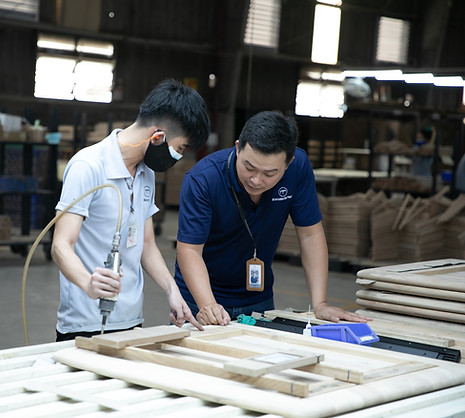
To achieve and maintain the above certifications, we demonstrate that we consistently manufacture and provide products that meet the standards, and that our operations do too. The certification processes and subsequent re-certifications involve extensive audits by accredited third parties.

Future Targets
We see the future as a responsibility as much as an opportunity. Our ambition is to continuously raise the bar for how we act as a company - in governance, social responsibility, and environmental performance. We are committed to setting ambitious targets that strengthen compliance, enhance transparency, and align our business with the highest international standards. These efforts are designed not only to reduce risks and improve efficiency, but also to foster trust, attract talent, and differentiate us in the market. By looking ahead and preparing for the next steps in our ESG journey, we ensure that CoreOne remains a responsible and forward-thinking partner for our customers, our employees, and the communities we are part of.
”
Do you know that CoreOne will be able to deliver carbon footprint metrics for each individual product by the end of 2027?
”
ISO 37001
In the end of 2026, we will be certified according to ISO 37001, the international standard for anti-bribery management systems. It will further help us establish, implement, maintain, and improve our anti-bribery compliance program. We see benefits in risk management, compliance, reputation, and operational improvement, and we foresee gaining a competitive advantage through the certification.
Certified B Corp
A Certified B Corporation, or B Corp, is a designation for businesses that meet the highest standards of verified social and environmental performance, public transparency, and legal accountability to balance profit and purpose. It involves a lengthy, rigorous assessment process that measures a company's impact on its workers, customers, community, and environment, and our target is to achieve the certification in 2027. We trust that benefits of differentiation in the market, enhanced credibility and trust, employee engagement and easier talent attraction will be among the long-term impacts, and that the certification process will help us lead in sustainability and social responsibility within our industry. B Corp is for companies that use business as a force for good, and for that we find B Corp one of the most meaningful certifications that we can possibly get.
LCA and Carbon Footprint Metrics
In 2027, we expect to be able to provide the exact carbon footprint metrics for every single product in our assortment. We are currently building models and collecting data for this significant task that will benefit all our environmentally focused customers and help us in environmental decision making, product and process improvement, sustainability reporting, Eco-Design, and regulatory compliance.

ESG report
When we issue our financial statements for the fiscal year 2027 in Q2 of 2028, we will also issue our very first ESG report. We are gathering extensive data from our operations and are building our baselines for consumption, emission, and waste. The ESG report will benefit all our stakeholders, and it will show our commitment to continuous improvements.


